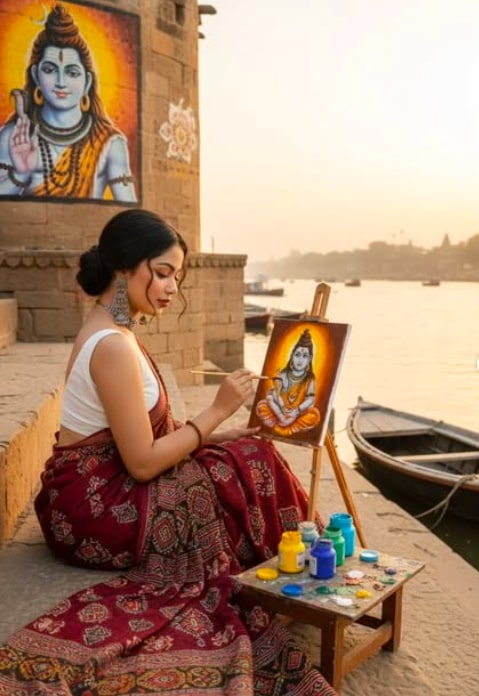
Varanasi Ghat Artist Portrait🎨✨
Om Editing Top के साथ Varanasi Ghat Artist Portrait क्या है?
Om Editing Top style का Varanasi Ghat Artist Portrait एक ऐसा cinematic portrait concept है जो traditional Indian beauty, artistic mood, aur spiritual Varanasi atmosphere ko ek saath blend karta hai. Isme subject ko ghat ki stone steps par seated dikhaya jata hai, jahan warm sunlight, old stone textures, aur handcrafted art elements milkar ek rich visual story banate hain.
Read Also: cinematic-style realistic portrait | 2026 New Year
Ye style un logon ke liye hai jo apni photo ko ek elevated, premium, aur culturally rooted look dena chahte hain. Agar aap fashion portrait, devotional art mood, ya realistic cinematic edit pasand karte hain, to Om Editing Top ka ye prompt-style concept aapko ek aisa result de sakta hai jo social media par instantly attention grab kare.
Is type ke portrait me sirf outfit ya pose important nahi hota, balki poora scene ek narrative create karta hai. Varanasi ki ghats, stone steps, natural light, aur artist props milkar image ko ek expressive frame dete hain. Isi wajah se ye style photographers, editors, content creators, aur AI image users ke beech kaafi popular ho raha hai.
This Style photo style me actual output kya milta hai?
Om Editing Top ka ye portrait style generally ultra photorealistic aur cinematic feel deta hai. Image me warm natural lighting hoti hai jo skin tones ko soft, rich, aur realistic banati hai. Background me old stone wall aur ghat architecture ki wajah se depth aati hai, jabki foreground me paintbrush, acrylic jars, aur artist palette jaise details scene ko believable banate hain.
Colour palette usually earthy aur elegant hoti hai—maroon, white, stone grey, aur warm golden highlights ke saath. Ye combination photo ko premium look deta hai aur subject ko environment ke saath naturally merge karta hai. Composition bhi important hota hai: subject center ya slightly off-center बैठती hai, jis se portrait balanced aur editorial feel deta hai.
Is style ka sabse strong point realism aur mood ka combination hai. Face details sharp rehte hain, outfit texture clearly visible hota hai, aur background overdone nahi lagta. Result ek aisa frame hota hai jo romantic bhi lag sakta hai, artistic bhi, aur devotional undertone bhi carry karta hai.
- Warm natural lighting for soft cinematic effect
- Deep earthy tones like maroon, beige, stone grey
- Realistic props: brush, canvas, paint jars, palette
- Strong background storytelling through ghat steps and old wall
- High-detail portrait look with natural skin texture
This Style prompt ko mobile par kaise use karein: step-by-step guide
Agar aap beginner hain, to is style ko use karna complicated nahi hai. Aapko bas correct reference photo choose karni hoti hai, prompt box me style concept use karna hota hai, aur result ko refine karne ke liye basic selection aur upload process follow karna hota hai. Mobile se bhi ye kaam easily ho jata hai agar aap photo quality par dhyan dein.
Sabse pehle apni best reference image select karein. Photo clear honi chahiye, face visible hona chahiye, aur pose aisa ho jo seated portrait me convert ho sake. Uske baad editing tool ya AI generator me upload karke style apply karein. Agar first result perfect na aaye, to same photo ka dusra angle ya better lighting wala version try karein.
Better output ke liye reference photo me unnecessary filters avoid karein. Natural look wale images zyada realistic transformation dete hain, khas kar jab aap cinematic portrait, traditional outfit, ya location-based edit chahte hain. Niche diye gaye steps beginner-friendly hain:
- Apni best clear photo choose karein jisme face properly visible ho.
- Photo me harsh shadows, blur, ya heavy beauty filter na ho.
- Editing app ya AI tool me image upload karein.
- Style concept ko apply karke output generate karein.
- Agar tool allow karta ho, to lighting aur realism ke liye minor adjustments karein.
- Final image ko zoom karke face, hands, saree folds, aur background details check karein.
- Jo version sabse natural aur balanced लगे, usi ko save karein.
Kaunsi photos This Style Varanasi Ghat Artist Portrait ke liye best hoti hain?
Is style ke liye sabse achchi photo woh hoti hai jisme subject ka face clearly dikh raha ho aur body posture relatively natural ho. Half-body ya seated pose wali images especially useful hoti hain, kyunki is concept me ghat steps aur artist setup ko frame me jagah chahiye hoti hai. Agar photo already front-facing ya slightly side-angled ho, to transformation aur bhi smooth lagta hai.
Resolution bhi important hai. High-resolution image se hair detail, saree texture, aur face clarity zyada achchi aati hai. Low-light ya noisy photo avoid karna better hota hai, kyunki warm cinematic lighting ke saath grain ya blur output ko weak kar sakta hai. Background simple ho to AI-style generation clean aur focused rehta hai.
Clothing aur colours bhi result ko affect karte hain. Agar original photo me outfit simple hai, to bhi transformation kaam kar sakta hai, but plain background aur neat clothing better base provide karte hain. Aise photos jisme subject ka face open ho, hair messy na ho, aur hands visible ho sakte hain, unse realistic artist-portrait feel generate hoti hai.
- Angle: Front-facing ya slight side pose best hota hai
- Resolution: Clear, high-quality image prefer karein
- Lighting: Soft daylight ya even indoor light useful hoti hai
- Background: Simple, uncluttered, aur non-distracting background rakhein
- Clothing: Plain, well-lit, aur body shape clearly visible outfit better hota hai
- Face visibility: Eyes, nose, aur facial outline clear honi chahiye
- Hands: Agar hands frame me hon, to pose aur prop placement natural lagta hai
Om Editing Top me realism aur mood ko strong kaise banaya jata hai?
Is tarah ke cinematic portrait me realism ka base light aur texture hota hai. Warm sunlight skin ko soft glow deti hai, jabki stone surface aur old wall image ko authenticity dete hain. Jab subject ke kapde, jewelry, aur props sab ek hi colour harmony me hote hain, to final image ek designed editorial frame jaisa lagta hai.
Moon or mood ka effect bhi important hai—yeh image ko sirf pretty nahi, balki expressive banata hai. Artist pose, canvas work, aur devotional painting element photo me storytelling add karte hain. Is wajah se ye style generic portrait se kaafi alag aur memorable lagta hai.
Agar aap apni edit ko aur polished banana chahte hain, to aise photos choose karein jahan face par natural expression ho aur body language calm ho. Isse Om Editing Top style ka cinematic, realistic, aur art-inspired finish aur better dikhai deta hai.
Pro Tips for the Best Results with This Style
To get the most polished Om Editing Top look, start with a clear reference image and a prompt that keeps the subject details consistent. The strongest edits usually come from combining a well-lit portrait with specific instructions about clothing, pose, background, and mood. When the base image is sharp, the final result feels more natural and cinematic.
It also helps to think like a creator, not just a user. Decide what emotion you want the image to give: artistic, devotional, elegant, dramatic, or soft and personal. Small choices like the angle of the face, the warmth of the light, or the amount of background detail can completely change the final vibe. That is why Om Editing Top works best when you use it with a clear visual direction.
- Use a high-quality reference photo with a clear face and balanced lighting.
- Keep the pose simple so the face and outfit remain the main focus.
- Ask for natural skin texture and realistic fabric details for a more photoreal look.
- Match the background to the story, such as heritage locations, stone steps, or artistic spaces.
- Specify accessories carefully, like jhumkas, chokers, bangles, or hair buns, if they matter to the design.
- Choose warm, golden, or natural lighting when you want a cinematic portrait feel.
If you are aiming for social-media-ready results, it is smart to test a few variations of the same concept. One version can be more vibrant, another can be softer, and another can lean into a moody editorial style. This gives you more control over the final output and helps you find the exact Om Editing Top style that fits your content best.
Common Mistakes to Avoid in This Style
One of the biggest mistakes is overloading the prompt with too many conflicting ideas. When the subject, clothes, setting, and lighting all compete for attention, the image can lose clarity. A focused prompt gives the model a much better chance of producing a clean and balanced portrait.
Another common issue is ignoring consistency in the face and pose. If the reference image is unclear or the instructions are too vague, the edit may change facial features too much or create unnatural proportions. For a strong Om Editing Top result, clarity is always better than complexity.
- Using a blurry reference image: This can reduce facial accuracy and make the output look less refined.
- Adding too many style directions: Too many mood words can make the image confusing and inconsistent.
- Forgetting background balance: A crowded background can distract from the subject and weaken the portrait impact.
- Skipping outfit detail: If clothing is not clearly described, the final image may not match the desired look.
- Over-editing the face: Heavy alterations can make the portrait feel less natural and less believable.
- Not matching lighting to the scene: Harsh or mismatched light can break the cinematic atmosphere.
It is also worth avoiding vague instructions like “make it beautiful” or “make it cinematic” without context. These words are too broad on their own. Instead, combine them with concrete details such as warm daylight, stone textures, artistic props, or traditional styling so the Om Editing Top output feels intentional and usable.
Best Use Cases and Creative Ideas
The this style style is perfect for people who want visually rich portraits with a cultural, artistic, or editorial feel. Because it blends traditional elements with a creative setup, the image can be used across many platforms without looking generic. It works especially well when you want your content to stand out while still feeling personal.
This kind of edit is ideal for Instagram posts where the subject needs a strong visual story. It also works beautifully for profile pictures, cover images, and artistic portfolios because the portrait feels both expressive and polished. If you create reels, the same image can be used as a cover to make the content look more premium and clickable.
- Instagram posts: Great for aesthetic feeds, portrait carousels, and culture-inspired edits.
- Profile pictures: Useful when you want a refined, artistic, and memorable display photo.
- Thumbnails: Works well for art, fashion, lifestyle, or travel-related content.
- Portfolios: Adds a professional and creative look for personal branding.
- Reels covers: Helps make short videos look more attractive and organized.
You can also use this style for themed series, such as traditional portrait edits, artistic character concepts, or festive cultural visuals. If you are building a content grid, the image can serve as a strong anchor post that sets the tone for the rest of your visuals. That makes this prompt a flexible choice for creators, designers, and social media users alike.
Variations You Can Try with This Style
One of the best things about this look is that you can keep the same core idea and still create many different moods. By changing the colour palette, season, lighting, or atmosphere, you can make the image feel fresh every time. This is especially useful if you want multiple posts from a single concept without repeating the exact same look.
For example, a warm golden version can feel festive and soft, while a cooler tone can make the portrait look more dramatic and artistic. You can also shift the location mood from heritage and earthy to bright and seasonal. These small changes help you explore new creative directions while keeping the main subject identity intact.
- Mood variations: Soft, devotional, dramatic, royal, serene, or painterly.
- Colour changes: Maroon, deep red, earthy brown, ivory, gold, or muted pastel accents.
- Setting options: Stone steps, temple surroundings, riverside views, heritage walls, or artistic studio corners.
- Seasonal versions: Summer light, monsoon atmosphere, winter haze, or festive evening glow.
- Lighting styles: Warm sunset, natural daylight, candle-like glow, or soft diffused light.
You can also experiment with prop styling. A canvas, paint jars, brushes, folded fabric, or subtle traditional accessories can each create a different story. If you want a more elegant portrait, reduce the clutter and keep the frame minimal. If you want a more creative story-driven image, add richer background detail and stronger texture. That flexibility is what makes yeh style so useful for experimentation.
Conclusion: Try This Style for a Cinematic Portrait Look
If you want a portrait that feels artistic, culturally rich, and visually striking, this edit is a strong direction to try. It combines traditional styling, natural warmth, and a cinematic atmosphere in a way that works well for social media and creative branding. The best part is that you can keep refining it until the image matches your exact taste.
Start with a clear reference, choose your mood carefully, and test different variations until you find the version that feels most natural and expressive. With the right setup, this style can turn a simple portrait into a memorable visual story that stands out instantly.
💬 Comments