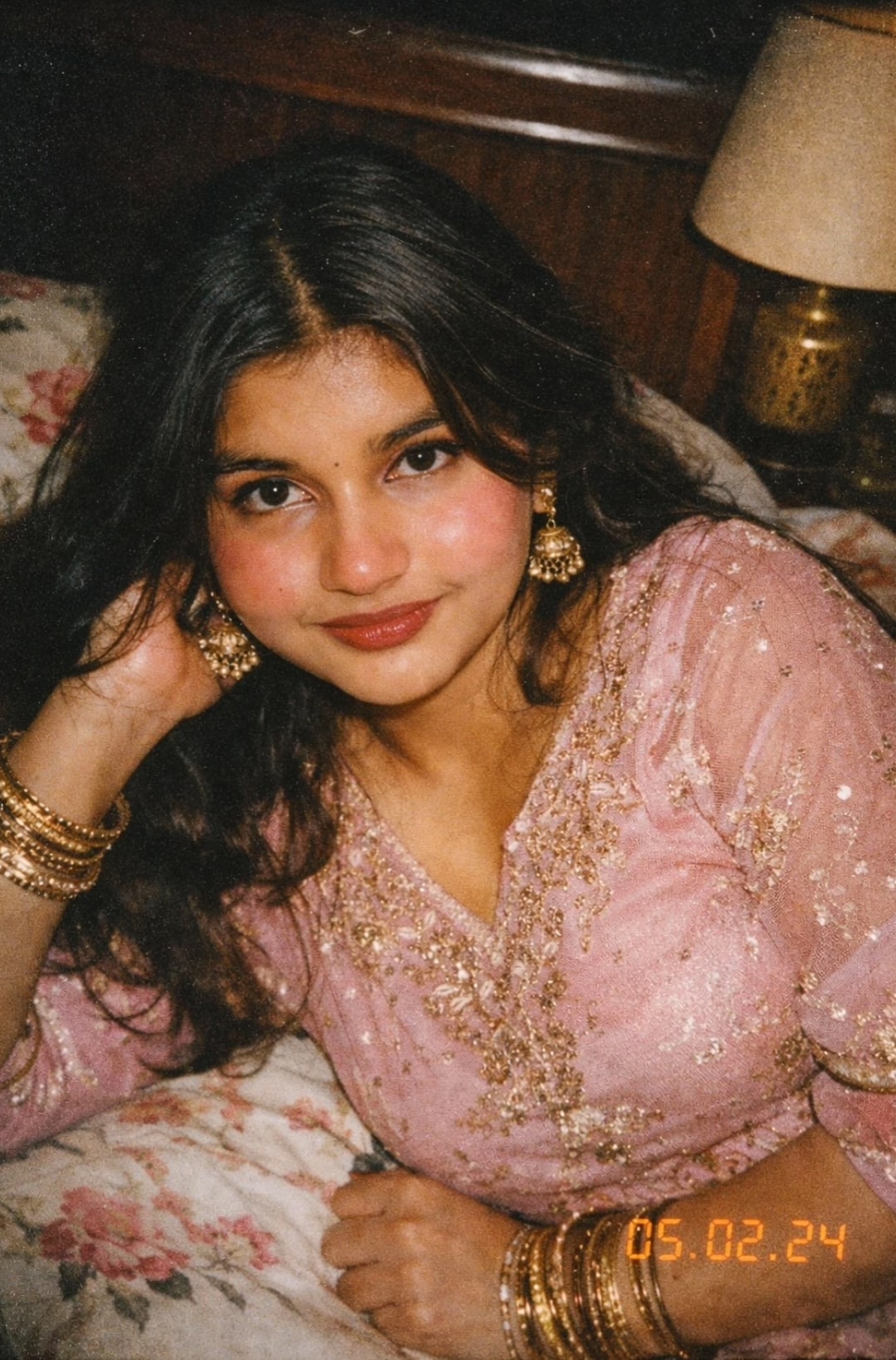
Nostalgic Lo-Fi Portrait of an Indian Woman
Om Editing Top: Nostalgic Lo-Fi Portrait of an Indian Woman
Om Editing Top style ka yeh portrait un creators ke liye hai jo ek simple photo ko cinematic, emotional aur vintage feel dena chahte hain. Is look mein modern digital polish ke saath lo-fi camera texture, flash photography vibes, aur old-school bedroom portrait ka nostalgic mood milta hai.
Read Also: cinematic-style realistic portrait | 2026 New Year
Ye style especially un logon ke liye useful hai jo Instagram, Pinterest, reels covers, profile aesthetics, ya photo editing experiments ke liye unique Indian portrait look banana chahte hain. Agar aap feminine, soft yet dramatic, aur realistic editorial-type image chahte ho, toh yeh prompt style kaafi effective hota hai.
Iska main appeal yeh hai ki photo over-polished nahi lagti. Instead, usme natural skin texture, grainy finish, warm-cool balance, aur intimate composition hota hai. Result ek aisi image hoti hai jo casual bhi lagti hai aur artistically curated bhi.
Yeh prompt style aapko kya deta hai?
Is type ke portrait mein sabse pehle jo cheez notice hoti hai woh hoti hai lighting. Hard flash ki wajah se face ke features sharp dikhte hain, shadows bante hain, aur image ko ek raw, disposable-camera type look milta hai. Saath hi dark vignette aur grain texture image ko old photo aesthetic deta hai.
Colour palette bhi is style ka important part hai. Pastel pink, soft gold embroidery, warm skin tones, aur dark background milkar ek strong contrast create karte hain. Yeh contrast portrait ko dreamy aur moody dono bana deta hai, jo lo-fi editing ka signature feel hota hai.
Composition mein subject usually medium close-up ya reclining pose mein hoti hai, jisse image zyada personal aur intimate lagti hai. Floral bedding, bedroom background, wooden headboard, aur jewellery jaise details photo ko culturally rich aur visually layered banate hain.
- Lighting: Direct flash, hard shadows, aur low-light bedroom atmosphere
- Mood: Nostalgic, calm, intimate, slightly cinematic
- Colours: Pastel pink, warm beige, gold accents, dark vignette
- Texture: Grainy CCD feel, lo-fi softness, slight noise
- Composition: Close framing, relaxed pose, face-focused portrait
This Style ko mobile par kaise use karein
Agar aap beginner ho, toh is style ko use karna actually simple hai. Sabse pehle aapko ek aisi photo chahiye jisme face clear ho aur pose relaxed ho. Phir editing app ya AI image tool mein prompt style apply karke look ko cinematic, grainy aur nostalgic direction mein le jaya ja sakta hai.
Mobile par kaam karte waqt focus hamesha 3 cheezon par hona chahiye: subject clarity, lighting balance, aur background control. Agar base photo strong hogi, toh final result aur bhi natural lagega. Weak photo par bhi style aa sakta hai, lekin detail aur realism kam ho jaati hai.
Step-by-step process follow karo:
- Apni photo select karo jisme face clearly visible ho.
- Portrait ratio ya medium close-up framing choose karo.
- Editing app mein lo-fi, grain, flash, ya vintage-style adjustments dhoondo.
- Brightness ko thoda control karo taaki harsh flash feel aaye, but face overexposed na ho.
- Slight vignette add karo taa ki background dark aur focused lage.
- Warm tones ke saath pink aur gold highlights ko preserve karo.
- Agar possible ho, grain or noise thoda increase karo for CCD-style realism.
- Final image ko zoom karke skin texture, jewellery detail, aur background edges check karo.
Best result tab aata hai jab aap ek hi baar mein over-edit nahi karte. Is style mein subtle imperfections hi beauty hoti hain, isliye texture aur shadow ko zyada smooth mat karo. Thoda raw feel image ko aur authentic banata hai.
Kaun si photos is style ke liye sabse achchi hoti hain?
Is look ke liye sabse best photo woh hoti hai jisme subject ka face side ya slightly high-angle view se visible ho. Medium close-up framing achchi lagti hai kyunki isme expression, makeup details, earrings, aur outfit texture sab clearly capture ho jaate hain. Full-body image bhi kaam kar sakti hai, lekin portrait feel ke liye close composition better hoti hai.
Lighting natural ho sakti hai ya artificial, but agar aap flash-style effect chahte ho toh front-lit photo zyada useful hoti hai. Background simple aur dark ya clutter-free ho toh subject aur zyada pop karti hai. Bedroom setting, bedsheet texture, wooden headboard, ya soft textile background lo-fi mood ko enhance karte hain.
- Angle: Slightly high-angle ya relaxed reclining pose
- Resolution: Clear face details ke saath high-resolution base photo
- Lighting: Front light ya flash-friendly lighting, harsh shadows ke liye
- Background: Dark, simple, bedroom-style, ya soft textile setting
- Clothing: Pastel, ethnic wear, shimmer, embroidery, ya jewellery-heavy styling
- Expression: Calm gaze, soft confidence, intimate but natural look
Agar aap chahte ho ki final result zyada believable lage, toh aisi photo choose karo jisme pose relaxed ho aur face par clear focus ho. Strong eye contact, slightly messy hair, aur minimal background distractions is aesthetic ko aur bhi powerful bana dete hain.
Pro tips for the best results with Om Editing Top
If you want the cleanest and most attractive Om Editing Top output, focus on clarity in every detail. The strongest edits usually come from a balanced prompt that gives the AI enough direction without overcrowding it with conflicting ideas. Keep the face description, pose, outfit, lighting, and background aligned so the final portrait looks intentional and polished.
For a nostalgic lo-fi portrait style, small choices matter a lot. The right combination of flash lighting, grain, and mood can completely change the feel of the image. When you use Om Editing Top, think like a photographer: decide the subject first, then build the scene around her so the result feels cinematic instead of random.
- Use a clear subject description so the portrait stays focused and realistic.
- Keep the mood consistent, such as nostalgic, soft, dreamy, or grainy.
- Choose one main lighting style, like hard flash or soft window light, instead of mixing too many effects.
- Match the outfit and background to the era or vibe you want to create.
- Add texture details like film grain, vignette, or CCD feel for a more authentic lo-fi look.
- Test small variations in color tone so you can find the most flattering result.
If you are editing for social media, try different crop styles and framing options too. A medium close-up often works best for portraits because it keeps the face prominent while still showing enough styling detail. With Om Editing Top, these little refinements can make your image look more premium and more shareable.
Common mistakes to avoid in This edits
One common mistake is making the prompt too crowded with extra style words. When too many effects are added at once, the portrait can lose its focus and start looking messy. For Om Editing Top, a cleaner direction usually gives a sharper and more attractive result.
Another issue is mixing mismatched visual ideas. For example, if the lighting says soft and airy but the mood says harsh flash and dark vignette, the final image may feel confused. The best Om Editing Top edits keep the subject, lighting, and setting working together instead of fighting each other.
- Overloading the prompt: too many adjectives can reduce image quality and make the result feel cluttered.
- Inconsistent lighting: mixing soft and harsh light in the same direction can weaken the photo’s atmosphere.
- Random background choices: a background that doesn’t match the portrait style can break the nostalgic look.
- Ignoring outfit and accessories: missing visual details can make the edit look less complete.
- Forgetting the mood: if the emotional tone is unclear, the image may feel generic instead of memorable.
It also helps to avoid changing too many visual themes in one edit. A lo-fi portrait works best when the composition feels unified, with one clear story behind it. That is why Om Editing Top performs better when you keep the subject, textures, and lighting style aligned from start to finish.
Best use cases and ideas for This Style portraits
this style is especially useful when you want images that feel stylish, emotional, and ready for social sharing. This kind of portrait works beautifully for Instagram posts, profile pictures, and aesthetic feeds because it carries a strong mood without needing much extra editing. The nostalgic finish also makes it stand out in a crowded scroll.
You can use this style in many creative ways. A polished lo-fi portrait is also great for thumbnails, portfolio samples, mood boards, and reel covers. Because the image has a strong visual identity, it can instantly communicate a soft retro vibe, which is perfect for creators who want a memorable personal brand.
- Instagram posts: ideal for aesthetic portrait dumps, fashion content, and mood-based storytelling.
- Profile pictures: works well when you want a confident yet artistic first impression.
- Thumbnails: useful for beauty, edit, or lifestyle content where a striking face draws attention.
- Portfolios: great for showing editorial-style creativity and consistent visual taste.
- Reels covers: helps build a cohesive feed with a retro, lo-fi look.
If you create content regularly, this style can become part of your signature look. You can keep the same overall structure and change only the mood or color palette depending on the platform. That flexibility is one of the biggest strengths of this prompt.
Variations you can try with This Style
Once you get a strong base result, start experimenting with different moods and color directions. This is where this look becomes really useful, because the same portrait idea can feel completely different with a new setting, season, or palette. A simple change in tone can turn a soft romantic look into something more dramatic or playful.
You can try warmer tones for a cozy nostalgic feel, cooler tones for a moody late-night aesthetic, or desaturated colors for a more vintage editorial result. Seasonal changes also work well, especially if you want the image to match a festival vibe, rainy-day softness, or winter-inspired styling.
- Mood variations: dreamy, intimate, melancholic, cinematic, playful, or confident.
- Colour variations: warm orange, dusty pink, beige neutral, cool blue, faded sepia, or muted pastel.
- Setting variations: bedroom portrait, indoor vintage setup, soft textile background, or low-light fashion frame.
- Seasonal variations: monsoon mood, winter cozy tones, summer glow, or festive retro styling.
- Style variations: stronger grain for a raw lo-fi feel, cleaner flash look for a sharper editorial finish, or softer vignette for a dreamy effect.
These variations help you build a whole set of images without losing consistency. That is useful if you want multiple posts that still feel like part of the same creative series. With yeh style, you can experiment freely while keeping the overall portrait style recognizable.
Conclusion: try This Style for your next portrait edit
this edit is a strong choice when you want a nostalgic, lo-fi portrait that feels artistic and visually rich. It works especially well for Indian portrait aesthetics, soft editorial styling, and social-media-ready images that need a moody, cinematic touch.
If you want a portrait that feels expressive, stylish, and memorable, try different versions of this style and see which mood fits your idea best. A few small changes in lighting, colour, or texture can completely transform the final result, making it easy to create something that feels truly unique.
💬 Comments