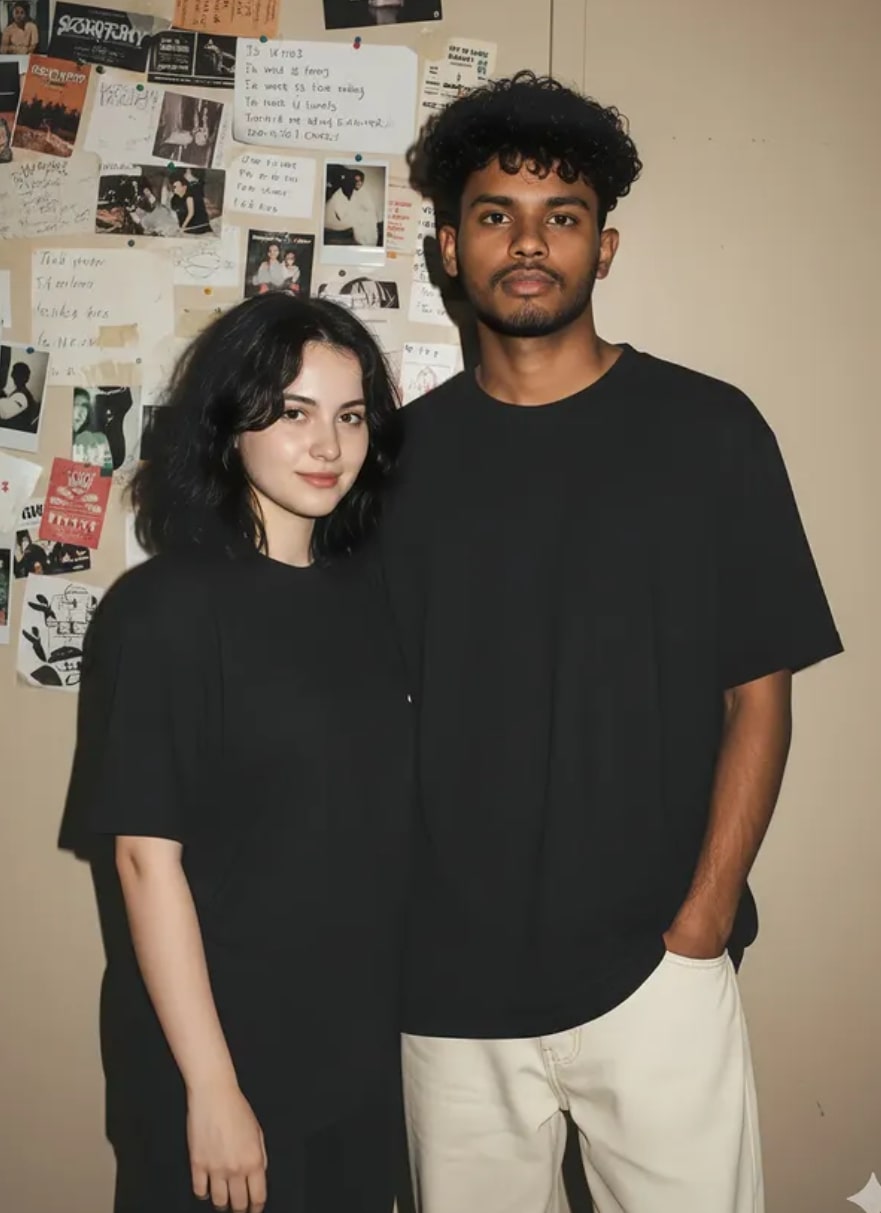
Lo-Fi 90s Flash Portrait of a Young Woman & Boy
Om Editing Top: Lo-Fi 90s Flash Portrait Style Kya Hai?
Om Editing Top jaisa lo-fi 90s flash portrait style un logon ke liye perfect hai jo apni photos ko raw, nostalgic aur thoda edgy look dena chahte hain. Is type ki editing mein image bahut polished nahi lagti; instead usme film-like grain, direct flash, flat shadows aur retro mood hota hai. Yeh style un creators ke liye useful hai jo social media par alag dikhna chahte hain, especially portrait, couple, friend, ya candid-style photos ke liye.
Read Also: cinematic-style realistic portrait | 2026 New Year
Is look ka biggest appeal uski simplicity hai. Ek normal sa portrait bhi is style mein instantly 90s era ki vibe de sakta hai, jaise photo kisi old compact camera se li gayi ho. Agar aap Om Editing Top inspiration ke saath lo-fi flash aesthetic banana chahte ho, to focus clean perfection par nahi balki mood, texture aur honesty par hota hai. Isme face details natural rehte hain, background thoda busy ho sakta hai, aur overall image mein ek real, unfiltered feeling aati hai.
Ye style beginners ke liye bhi easy hai, kyunki isme over-editing ki zarurat nahi hoti. Bas sahi photo, correct lighting, aur basic adjustment se aap strong retro result paa sakte ho. Especially un logon ke liye jo boy aur girl portrait, duo shot, ya urban-casual vibe create karna chahte hain, yeh approach kaafi effective hota hai.
Is Photo Style Mein Kya Milega?
Lo-fi 90s flash portrait style usually aapko ek harsh yet flattering flash look deta hai. Light direct hoti hai, isliye face aur skin par clean highlight aata hai, jabki shadows flat aur simple dikhte hain. Isse image mein ek documentary-like realism aa jati hai, jo modern soft beauty edits se bilkul alag feel hoti hai.
Colors generally muted ya slightly washed-out hote hain. Beige, off-white, faded black, dull red, aur warm skin tones is aesthetic mein achhe lagte hain. Background agar cluttered ho — jaise wall, posters, notes, or candid room setting — to photo aur bhi authentic dikhti hai. Om Editing Top style ka aim perfect studio polish nahi, balki ek nostalgic snapshot feel create karna hota hai.
Composition mein bhi simplicity important hoti hai. Subject center ya slightly off-center ho sakta hai, aur pose relaxed. Facial expression subtle smirk, calm look, ya casual confidence jaisi ho sakti hai. Agar boy aur girl dono frame mein hain, to unke expressions natural aur unposed rakhne se overall image zyada believable aur stylish lagti hai.
- Direct flash se flat, bold lighting
- Soft grain aur lo-fi texture
- Muted, retro colour palette
- Candid aur slightly imperfect framing
- Nostalgic 90s photo album feel
Om Editing Top Style Use Kaise Karein? Step-by-Step Guide
Agar aap mobile par kaam kar rahe ho, to process ko simple rakho. Sabse pehle ek aisi photo select karo jisme face clear ho aur pose too much artificial na lage. Lo-fi flash style mein natural expression bahut important hota hai, kyunki editing ka core feeling hi candid realism hai. Om Editing Top type result ke liye photo ko pehle base level par strong banana padta hai.
Uske baad brightness, contrast aur highlight balance ko check karo. Flash look ka matlab ye nahi hota ki photo overexposed ho jaye; instead light direct aur controlled lagni chahiye. Agar image mein background clutter ho, to use completely remove karne ki zarurat nahi hoti — thoda rough, busy backdrop bhi aesthetic ka part ban sakta hai.
Beginners ke liye best workflow ye hota hai ki pehle basic correction karo, phir retro tone aur grain add karo. Mobile editor par slow and steady edits karo taaki photo natural rahe. Final image ko zoom out karke dekho, kyunki lo-fi portrait ka impact overall mood se aata hai, sirf face se nahi.
- Ek clear portrait ya duo photo select karo.
- Image ko crop karke face aur upper body ko focus mein lao.
- Brightness ko lightly adjust karo, over-bright mat karo.
- Contrast thoda increase karo taaki flash effect feel ho.
- Highlights aur shadows ko balance karo.
- Thoda grain, texture ya film effect add karo.
- Colours ko muted ya warm-retro tone mein shift karo.
- Background ko as-it-is rakho ya lightly desaturate karo.
- Final output ko social media friendly size mein export karo.
Kaun Si Photos Is Style Ke Liye Best Rehti Hain?
Is style ke liye sabse achhi photos woh hoti hain jisme subject ka face clearly visible ho aur camera angle too much dramatic na ho. Front-facing ya slightly side angle portraits best kaam karte hain. Agar aap boy and girl ka portrait banana chahte ho, to dono ka framing balanced hona chahiye taaki flash photo naturally composed lage.
Resolution jitni better hogi, utna final result crisp dikhega, lekin ultra-smooth image is style ke liye जरूरी nahi hai. Thoda natural softness, minor grain, aur light imperfection is aesthetic ko strong banati hai. Lighting ideally indoor direct flash ya bright but simple light honi chahiye. Very soft beauty lighting se 90s flash vibe kam ho sakti hai.
Background ke case mein messy room, plain wall, posters, old paper, ya urban casual setting kaafi useful rehti hai. Clothing bhi important hai: simple black, white, muted tones, oversized tees, casual jackets, ya everyday streetwear is look mein suit karte hain. Agar aap Om Editing Top mood banana chahte ho, to over-accessorized ya glossy fashion look se bachna better hota hai.
- Angle: front-facing ya mild side profile
- Resolution: clear, sharp, but not overly processed
- Lighting: direct flash, indoor light, or bright natural light
- Background: simple wall, poster wall, cluttered room, or casual indoor space
- Clothing: plain tees, dark tops, streetwear, vintage-inspired outfits
90s Flash Portrait Mein Realism Kaise Banayein?
Is aesthetic ka secret realism hai. Photo ko fake-perfect banane ki jagah uske imperfections ko preserve karna padta hai. Light ka direct feel, thodi grainy texture, aur casual pose together milkar ek honest image banate hain. Isi wajah se lo-fi style social media par attention grab karta hai.
Agar subject ka expression natural ho — jaise halka sa smirk, calm stare, ya offbeat confidence — to image aur zyada interesting lagti hai. Boy aur girl dono frame mein ho to unka pose forced na लगे. Ek casual shoulder turn, side glance, ya close standing position bhi enough hoti hai. Om Editing Top type edit mein over-posing se bachna chahiye.
Final touch ke liye colors ko thoda vintage rakho aur image ko zyada clean na karo. Thodi roughness hi is style ki identity hai. Jab photo dekhne par aisa lage ki ye ek spontaneous old-school flash shot hai, tab samajh lo ki aesthetic sahi ban gaya hai.
Pro tips for the best results with Om Editing Top
अगर आप Om Editing Top style में crisp, realistic और visually strong result चाहते हैं, तो सबसे पहले composition पर ध्यान दें। Background कितना busy है, subject का face कितना clear दिख रहा है, और flash effect कितना harsh या soft है — ये तीनों चीज़ें final output को बहुत affect करती हैं। A good prompt या edit reference तभी काम करता है जब subject naturally frame में stand out करे और overall vibe 90s lo-fi feel को support करे।
Try to keep the subject’s expression simple but confident. Lo-fi flash portraits में overacting या exaggerated pose अक्सर output को artificial बना देता है, जबकि subtle smirk, side glance, या relaxed posture image को more natural बनाते हैं। If you want better Instagram-ready results, make sure the face details, hair texture, and background elements all match the retro aesthetic instead of fighting with it.
Here are some practical do’s that usually improve the final image:
- Use a cluttered but readable background so the portrait feels authentic without looking messy.
- Keep lighting direct and frontal if you want that classic flash-photo look.
- Choose natural facial expressions rather than dramatic poses for a more believable 90s style.
- Match the clothing and colors with the lo-fi theme, like muted tones, denim, black, beige, or faded pastels.
- Maintain face consistency so the features stay recognizable and do not become overly stylized.
- Experiment with grain and texture because a little roughness makes the portrait feel more like a real old photo.
Common mistakes to avoid in Om Editing Top edits
One of the biggest mistakes people make is adding too many effects at once. When flash, grain, blur, vignette, and color filters are all pushed too hard, the portrait can lose its 90s charm and start looking overprocessed. With Om Editing Top, the goal is usually to create a clean but gritty retro mood, not a heavily filtered image that hides the subject’s face.
Another common problem is using a background that does not support the story. A plain background can feel too empty, while an overly detailed one can distract from the portrait. The best balance is usually something slightly messy, vintage, and real-looking, so the boy and woman remain the main focus while the environment adds character.
- Too much smoothing removes the raw flash-photo feel and makes the face look plastic.
- Overexposed highlights can wash out important details like hair, eyes, and expression.
- Weak subject placement makes the image feel unbalanced and less cinematic.
- Random props or background items may break the retro aesthetic if they do not fit the 90s style.
- Heavy saturation can ruin the lo-fi mood and make the portrait look modern instead of nostalgic.
For better results, always keep the style consistent from top to bottom. If the portrait is meant to feel like an old candid flash photo, then the expressions, clothes, background, and color grading should all support that same idea.
Best use cases and creative ideas for Om Editing Top
These kinds of images work really well for social media because they feel personal, stylish, and nostalgic at the same time. A Om Editing Top portrait can be used as an Instagram post, a profile picture variation, or even a themed story highlight cover if you want a cool retro identity. The lo-fi flash aesthetic also makes the image feel more raw and expressive, which helps it stand out in a feed full of polished photos.
If you create content for YouTube or short-form platforms, this style can also be used as a thumbnail, reel cover, or mood poster. The combination of a young woman and boy in a vintage-inspired flash portrait can suggest friendship, street style, music culture, or personal storytelling. That makes it a strong visual for portfolios, edit pages, and creative showcases.
Some practical ways to use this style include:
- Instagram profile pictures for a unique, retro-inspired personal brand.
- Post edits and carousel covers where you want a strong aesthetic theme.
- Reels covers for music, fashion, or nostalgia-based content.
- Portfolio samples for editors who want to show portrait-retouching style.
- Thumbnail concepts for lifestyle, edit, or creative mood videos.
Because the look is lo-fi and emotional, it can also be used for digital art pages, fan edits, and identity-based mood boards. If your goal is to create something that feels both candid and stylish, this format gives you a lot of flexibility without losing the vintage mood.
Variations you can try with Om Editing Top
One of the best things about Om Editing Top is that you can experiment with different moods while keeping the same basic retro flash concept. For example, you can make the portrait feel more moody by using darker shadows, cooler tones, and a slightly more serious expression. Or you can make it feel softer by choosing warm beige tones, gentle facial expressions, and less contrast in the final image.
You can also change the setting to create a fresh version of the same idea. A cluttered wall, a bedroom corner, a street backdrop, or a music-room style background can all shift the story a little. Small changes in colour and environment make the portrait feel new while still staying inside the same lo-fi 90s aesthetic.
Here are a few variations worth trying:
- Mood variations: serious, dreamy, rebellious, soft, candid, or playful.
- Colour variations: beige and brown, faded blue, warm yellow, muted pink, or cool grey.
- Seasonal variations: monsoon haze, winter chill, summer sunlight, or autumn tones.
- Setting variations: bedroom wall, urban alley, concert-style background, studio corner, or college vibe.
- Style variations: stronger flash, heavier grain, softer blur, or more realistic skin texture.
If you want the image to feel more personal, try changing the pose slightly or adjusting the subject’s gaze. Even a small shift in angle can completely change the emotion of the portrait, especially when the flash is strong and the background stays intentionally imperfect.
Conclusion: try Om Editing Top for your next retro portrait
Om Editing Top is a great choice when you want a lo-fi 90s flash portrait that feels raw, nostalgic, and visually engaging. The style works especially well when you keep the face natural, the background textured, and the lighting bold enough to create that old-school camera effect.
If you want an edit that stands out on Instagram, in a profile photo, or in a creative portfolio, this look is definitely worth trying. Experiment with the mood, colors, and setting until the portrait feels right, and then use the same style again in different variations to build a strong visual identity.
💬 Comments